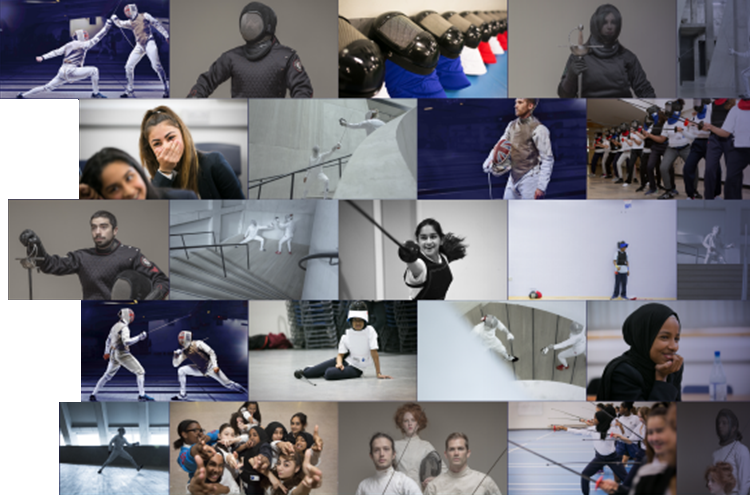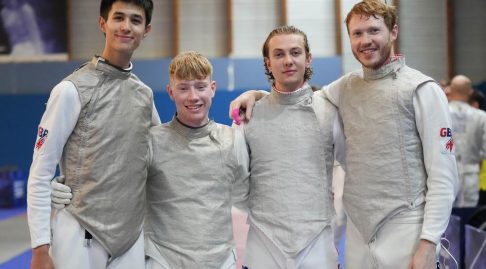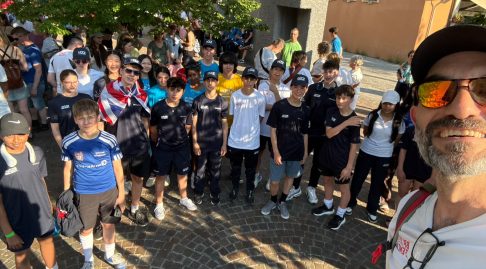
The April GBR Pathway Camp brought together athletes from across all weapons and disciplines for three days of development at Nottingham Jubilee Sports Centre and David Ross Sports Village. Across DiSE, athletes that were new to the pathway, and weapon‑specific camps, the focus remained firmly on preparing athletes for the demands of performance fencing, while continuing to support their holistic development on and off the piste.
Building strong foundations:
The camp opened with DiSE and athletes that were new to the Pathway, introducing athletes to key pathway principles and expectations. Following welcome briefings, athletes moved into practical sessions focused on RAMP warm‑ups, on‑guard mechanics, footwork and scenario‑based fencing. Classroom sessions supported the on‑piste work, encouraging reflection and discussion around behaviours, values and long‑term development.
Direct elimination bouts, competitive scenarios and structured debriefs throughout the day allowed athletes to apply learning in a pressurised environment, with coaches providing targeted feedback aligned to each fencer’s stage on the Pathway.
Athletes also heard from Jaimie Cook, who delivered talks about his athlete journey across multiple groups, offering insight into long‑term development, challenges and learning experiences within high‑performance sport.
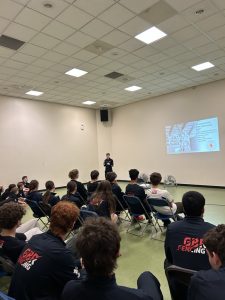
The True Athlete Project (TAP) was in attendance, supporting sessions focused on preparing to perform and embedding best practice around sustainable performance and wellbeing.
Development camps across all weapons:
From Wednesday onwards, Development Camps ran across epee, foil, sabre and wheelchair fencing, each built around clear technical and tactical themes.
Epee coach Paul Beasley reflected on the emphasis of the week:
“At the Pathway Camp in Nottingham this Easter, the epeeists worked on understanding the importance of foot placement, how to read the opponent’s intentions in their movement patterns, and fencing positively from both a winning and losing position. Through agile collaboration, the coaching team made sure that the content was as fun and engaging as possible.”
In foil, sessions centred on fencing positively, improving on‑guard and footwork mechanics, and transferring technical work into free fencing and match play.
Foil coach Marco Zaffino said:
“Working with Pathway fencers, DiSE and fencers new to Pathway, our aim was to deliver content that was vital and relevant to all levels of experience. We focused on both individual development and team dynamics, with the overarching theme being end-of-season reflection and pre-season goal setting. While we as coaches had identified specific areas for improvement, it was equally important to hear the athletes’ own perspectives on their strengths and aspects they wish to develop.”
Sabre athletes worked on middle-distance actions, using the whole piste effectively, and developing team and tactical awareness through match play.
Sabre coach Phil Shepherd-Foster commented:
“From a coaching perspective, one of the clearest gaps we see at U17 international level is not ability, but preparation. As coaches, we have a responsibility to set the standards for what performance looks like. This camp was built around the principle that prior preparation prevents poor performance, embedding consistent routines in RAMP warm-ups, nutrition, hydration, and mental readiness so athletes can step on and execute when it matters most.”
Wheelchair fencing sessions focused on tactical problem-solving and adaptability, encouraging athletes to identify challenges and explore multiple solutions during bouts.
During the camp, Wheelchair Fencing coach Nat Lewis commented:
“So today we’re building on the last camp we did which was on goal setting, and we decided our goal for this camp is going to be tactical problem solving on the piste. So today we’re working through finding problems and then looking at solutions for how to deal with them and how to win points based on that.”
Across all weapons, athlete‑led warm‑ups, sparring and team formats reinforced ownership, leadership and independence – key components of the GBR Pathway.
Athlete welfare and holistic development:
Athlete welfare remained central to the April camp programme. CRY cardiac screenings were delivered throughout the week, ensuring athletes had access to vital health checks alongside their fencing commitments.
A representative from CRY (Cardiac Risk in the Young) highlighted the importance of this work:
“Thank you to all of the BF staff in helping to organise and run the cardiac screening day at the camp in Nottingham recently. We screened a total of 70 young fencing athletes over the course of the day, which involved completing a health questionnaire, having a resting Electrocardiogram (ECG), and a consultation with one of our cardiologists. We also had an ultrasound machine/Echocardiographer with us for anyone who required one of these. It is great to be involved with an Olympic sport by providing these tests for the athletes, including the younger Pathway athletes. CRY staff always enjoy learning a bit more about each sport we work with.”
Off‑piste education sessions further supported athlete wellbeing. Nutrition and supplement workshops helped athletes better understand how to fuel training, recovery and competition, while UKAD classroom sessions reinforced clean sport values and personal responsibility.
The April Pathway Camp provided a strong platform as athletes move into the next phase of the season. By combining technical and tactical development with education, welfare support and meaningful competition experiences, the camp reflected the Pathway’s commitment to developing resilient, adaptable and self‑aware athletes.
BF would like to thank all athletes, coaches, staff, CRY and the True Athlete Project for their contributions to a successful and impactful camp.
The GBR Pathway Programme exists to nurture and retain talented athletes, ensuring a continuous pipeline of world-class fencers while keeping those who exit the pathway engaged in the sport.
The GBR Development Camps are open to all athletes selected onto the GBR Pathway Programme. These camps form the foundations of athlete learning, and are designed to bring the entire pathway cohort together within a shared development environment.
These camps are designed to provide athletes with a platform to develop their skills, experience high-level training in a supportive and challenging environment, and develop a wider GBR squad culture.
Click here for more info about – including how to join – the GBR Pathway programme.
See the below dates for the next GBR Pathway Development Camp:
Click here for more info about the GBR Pathway Development Camps.
Don’t miss the latest news. Subscribe to our weekly summary email, The Fencing Digest, including the previous week’s latest news and announcements. Sign up here.