This article forms part of a series of reports which accompany the 2024-25 BF Annual Report.
BF’s Project and Programme work, primarily funded by Sport England, delivers to identified under-represented groups in a series of agreed projects.
In this report:
Our Project and Programme work is primarily funded by Sport England and delivers to identified under-represented groups in a series of agreed projects to meet outcomes agreed with Sport England. These outcomes are aligned with the BF objectives to deliver accessible, inclusive swordplay opportunities delivered via partnership programmes and maximise the wider benefits of fencing and the positive impact it can have on people’s lives.
Fencing 4 Change is a programme delivered in partnership with the Change Foundation that uses fencing to improve physical literacy and reduce the risk of social isolation for young people aged 11 – 16 with Autism Spectrum Disorder (ASD). Over 85% of the young people involved in the original 24 week project showed an increase in one or more of: their friendship networks, using and understanding empathy, motor skills and ability to deal with change.
During year two of delivery, we have worked with eight schools in London and engaged approximately 90 young people.
In May 2024, the first Fencing 4 Change inter-schools competition took place at the Leon Paul Centre. This was the first time the participants had taken part in a competition against other schools, with three schools and 18 young people experiencing a fun and exciting day at Leon Paul.
During the second half of this period, the “Coaching Neurodiversity CPD” was developed in partnership with the Change Foundation. Launched in March 2025, the course is designed to give candidates an understanding of neurodiversity and how to run coaching sessions specific to fencers’ needs. It covers specific challenges to those who identify as neurodiverse, different methods of inclusion, examples of situations, and tips for coaching, as well sharing learnings from the Fencing 4 Change ASD Project.
Looking ahead, the partnership will focus on the following during 2025-26:
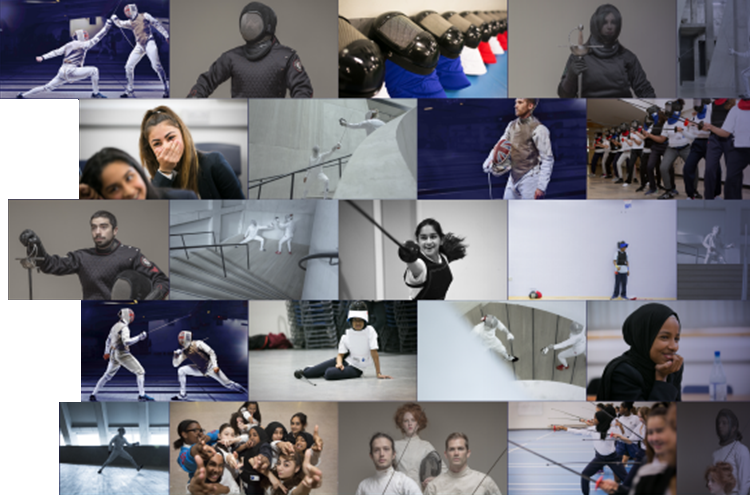
During 2024-25 Muslim Girls Fence continued to focus on the growth and development of existing projects, across Birmingham, Bradford and London, as well as continued delivery in schools.
During this period, 12 women from Birmingham completed their Core Coach training, with the aim of being able to better support new women joining the sessions. The partnership and team at Ladywood Leisure Centre continue to support the growth and long term sustainability of the group, a model that we hope can be adopted in other areas of the UK.
Towards the end of this period, we worked with Sunnah Sports in Bradford to introduce the SwordSeat™. This has provided opportunities for women with mobility challenges and are unable to take part in the standing fencing sessions to now join in.
Building on the recommendations from the Level Access Survey, work has continued to:
With members of the Fencing Development Team up-skilled to deliver the Wheelchair Fencing CPD, in May 2024 the first session was delivered in Bristol, with five coaches from the South West attending. The CPD, delivered in person, involves an introduction to the basics of the sport and look at some of the common differences and similarities between the standing and seated disciplines.
Throughout the year, the team has attended eight ‘come and try’ events, such as the Wheelpower Games and the Paralympics Discover Day events which provide opportunities for approximately 350 disabled people to try a new sport.
At the start of 2025, we saw a positive uptick in the number of clubs using Sport:80 to share accessibility information on their clubs, including information on whether they offer level access, disability-specific sessions, available toilet facilities and para-fencing equipment. This number has increased from 62 clubs to 133 and we continue to encourage clubs to review their information on Sport:80 and update accordingly.
In January 2025, SwordSeat™ was launched, our response to the prohibitive cost and equipment requirements of wheelchair fencing for clubs and individuals looking to get involved in the sport.
Funded through donations from the British Fencing Charity, the SwordSeat™ was developed and designed by Dr Ed Elias and Integrated Design Engineering student Conor Roberts, at the University of Bath. The SwordSeat™ has not only significantly reduced the cost of purchasing the equipment, but it also helps with clubs who face challenges over storage space and can be easily assembled in just a couple of minutes.
To support clubs in using the SwordSeat™ an online CPD has been developed and is available for free for all coaches and clubs to access. Our ambition is to have a SwordSeat™ in 50% of clubs by the end of 2030. Clubs have been invited to submit expressions of interest if they are interested in purchasing one.
Looking ahead to 2024-25, we will continue to demonsrate the SwordSeat™ at events and outreach engagements, as well as providing DIY plans for those who want to cut and assemble the seat themselves, giving even more access to the SwordSeat™ for clubs, coaches and fencers.
Click here for the full 2024-25 Annual Report.
Don’t miss the latest news. Subscribe to our weekly summary email, The Fencing Digest, including the previous week’s latest news and announcements. Sign up here.